




A tango skirt dances on its own
A skirt is the only garment in tango that dances on its own. It arrives a fraction after you do, and it leaves a fraction late. That delay is the whole point — a boleo reads as a boleo partly because of what the hem does behind it.
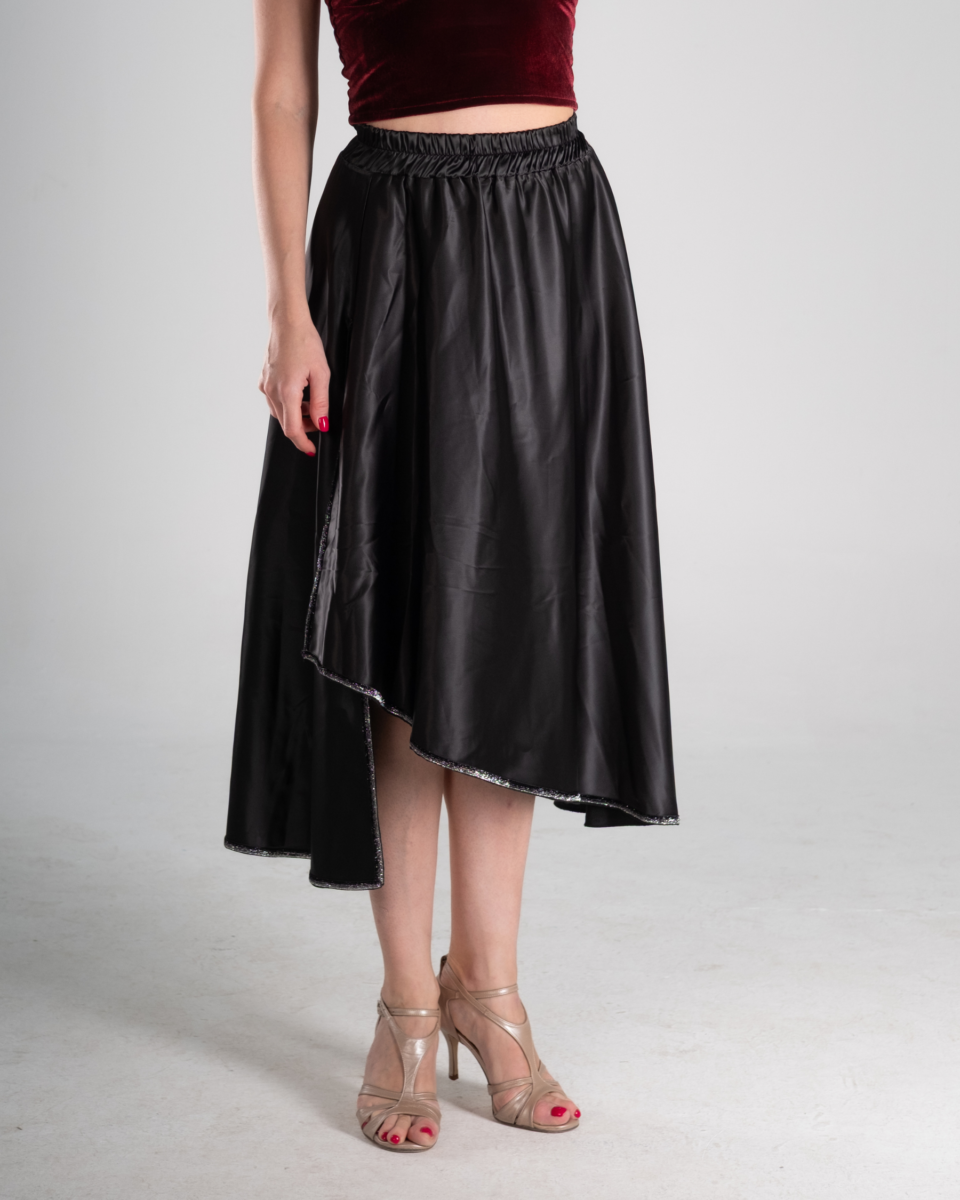
Which means the fabric is not decoration. It is part of the movement vocabulary. A heavy skirt travels in a slower, wider arc and settles decisively. A light one flares faster, higher, and takes longer to come back. Neither is better. They are different sentences.
Where the slit goes on a tango skirt
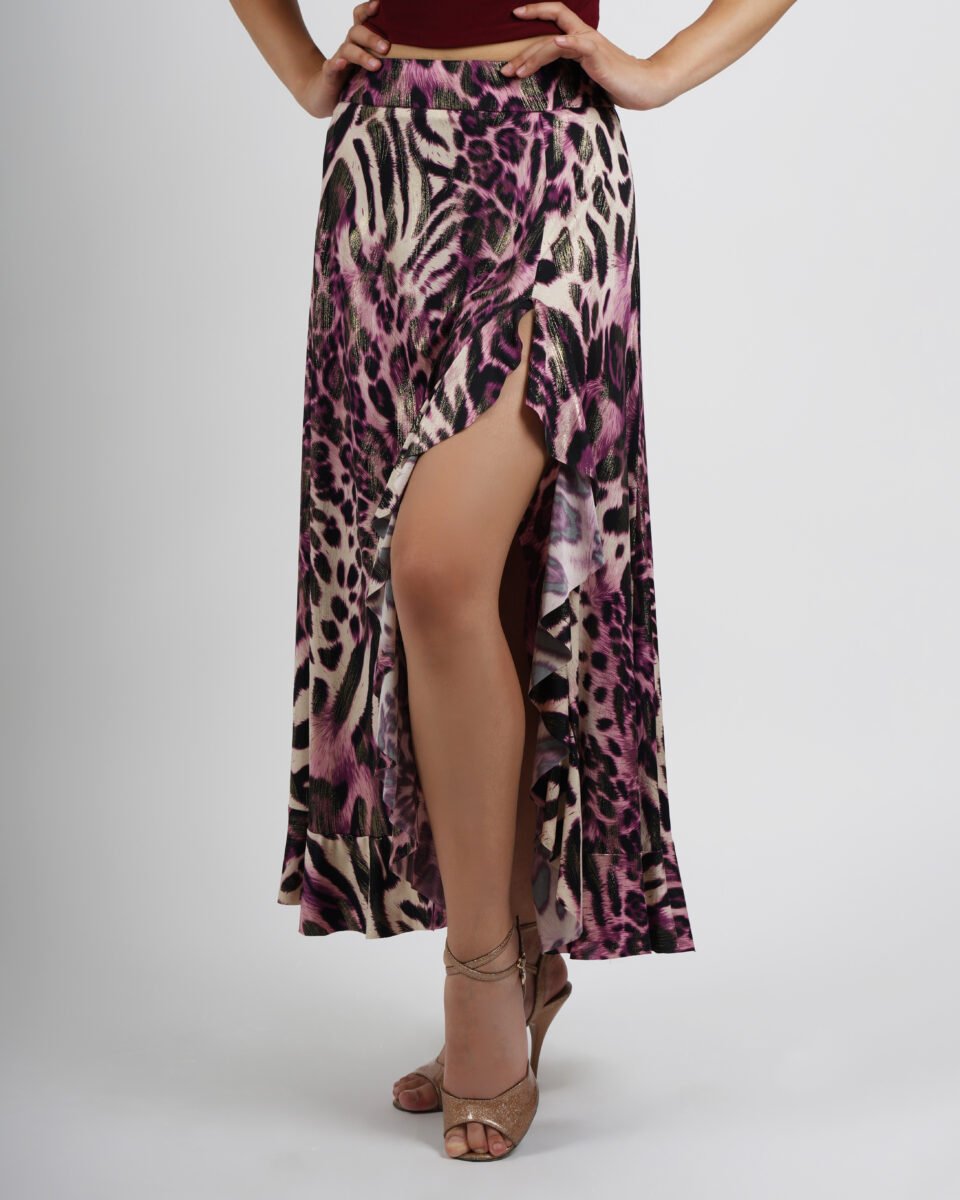
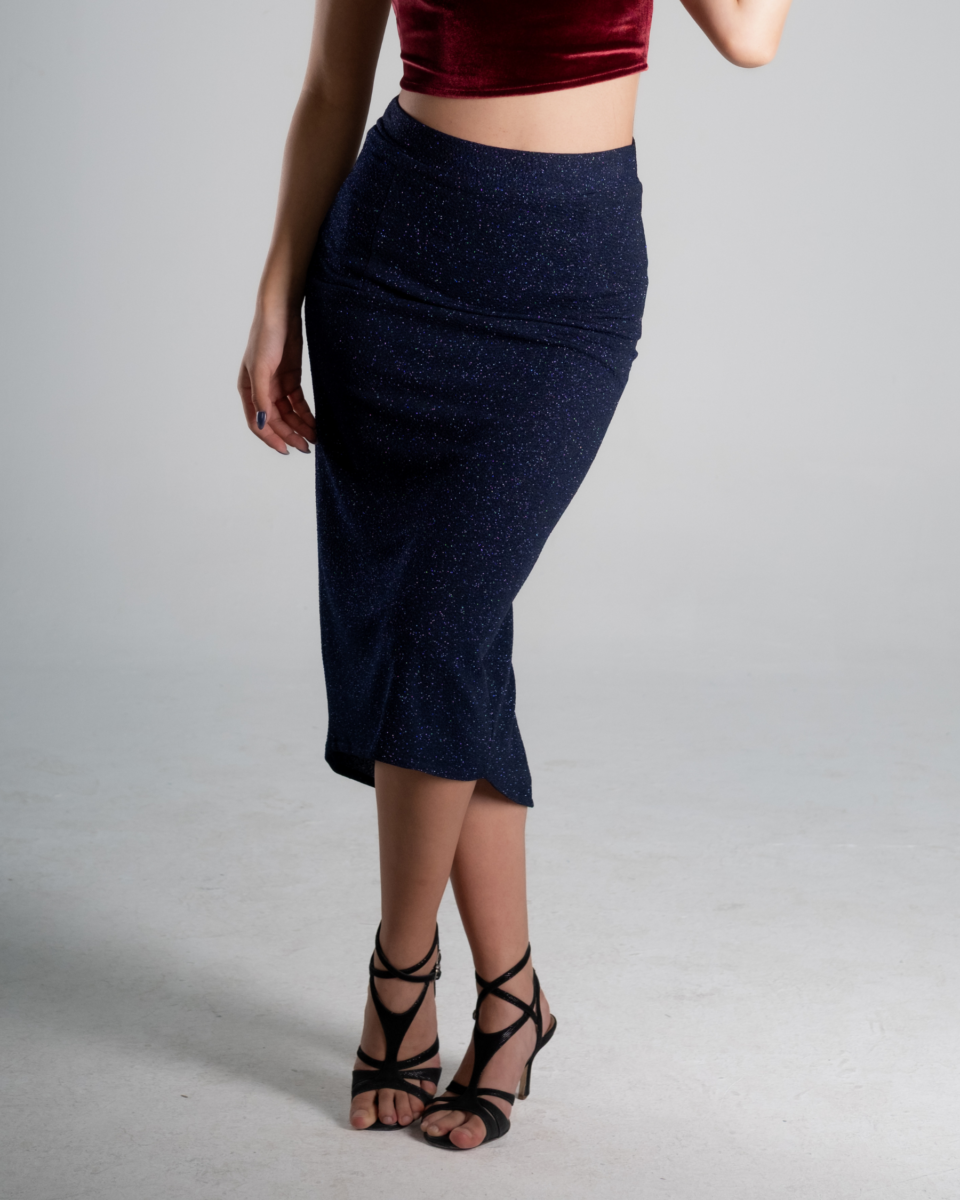
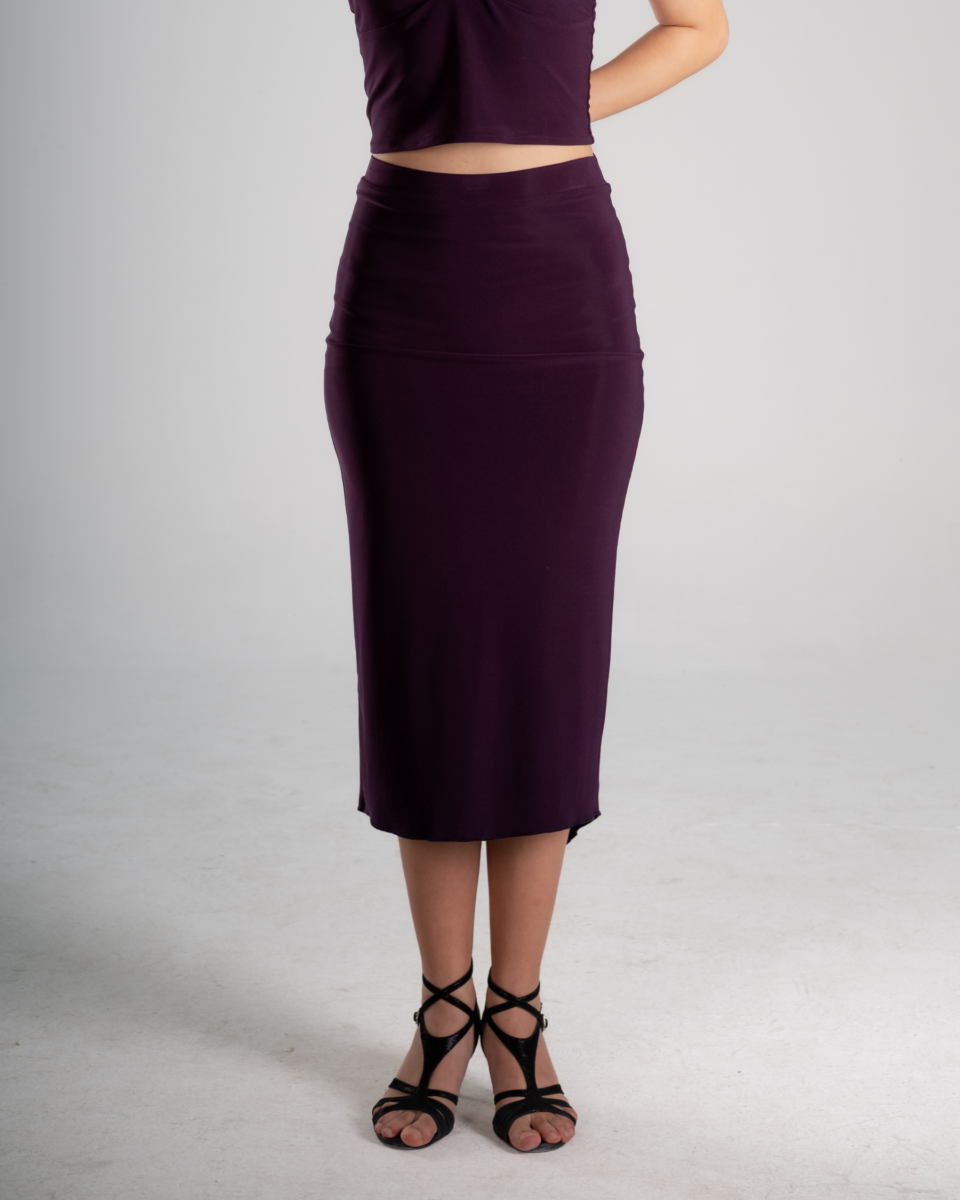
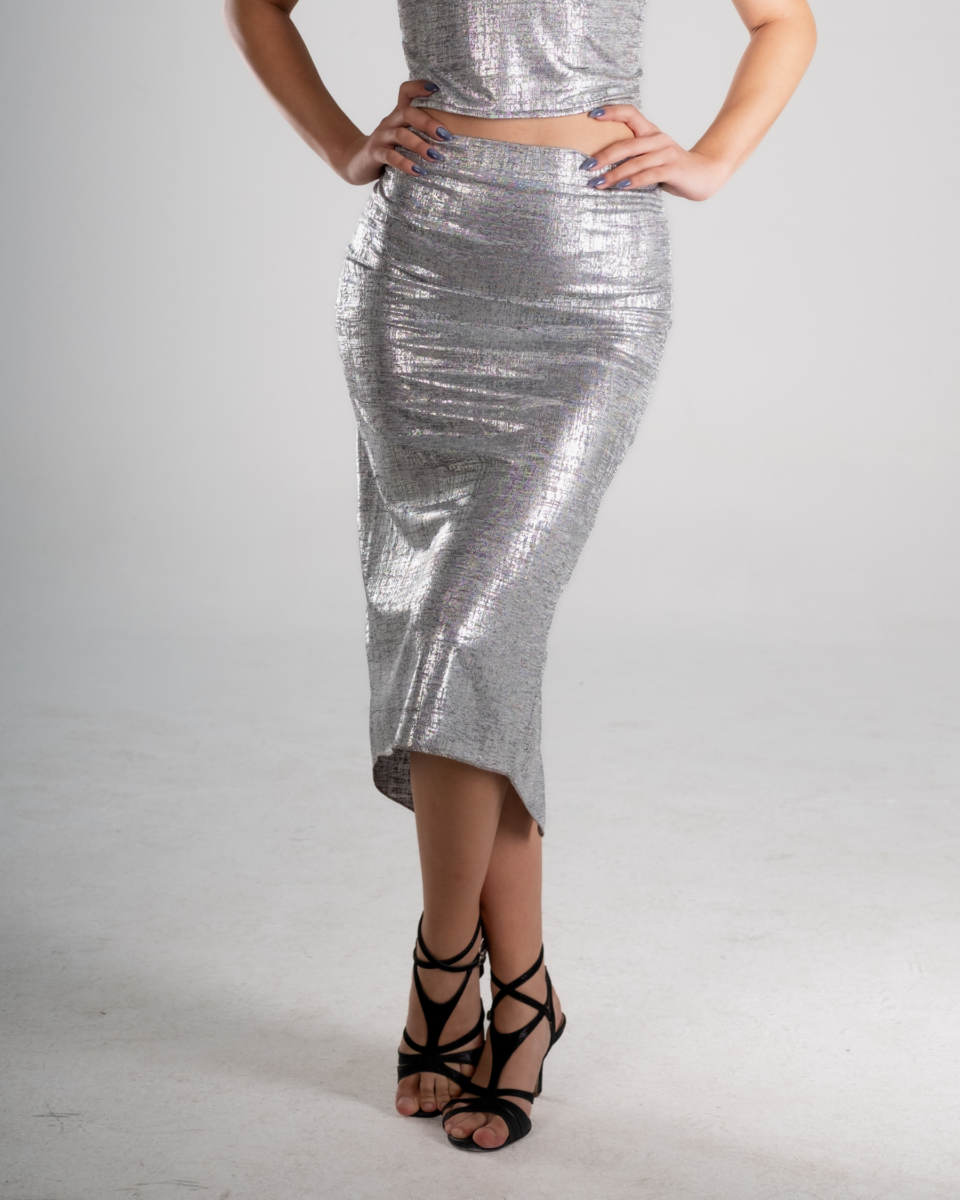
A slit is a functional decision before it is an aesthetic one. Too high and you spend the evening managing it. Too low and your own leg stops you at the top of a gancho. We cut to the point where the leg has full range and the skirt still closes at rest — and that point moves depending on how tall you are.
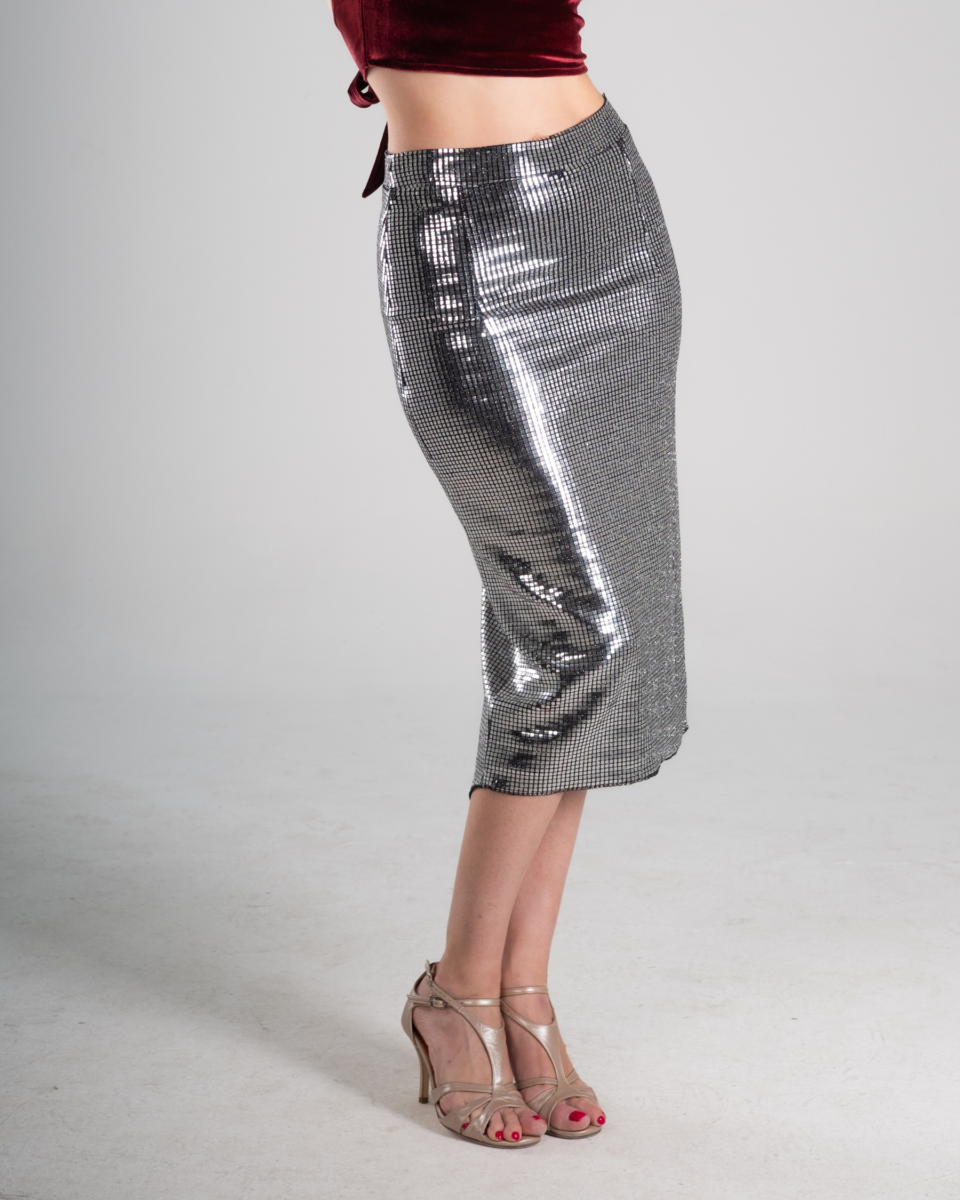
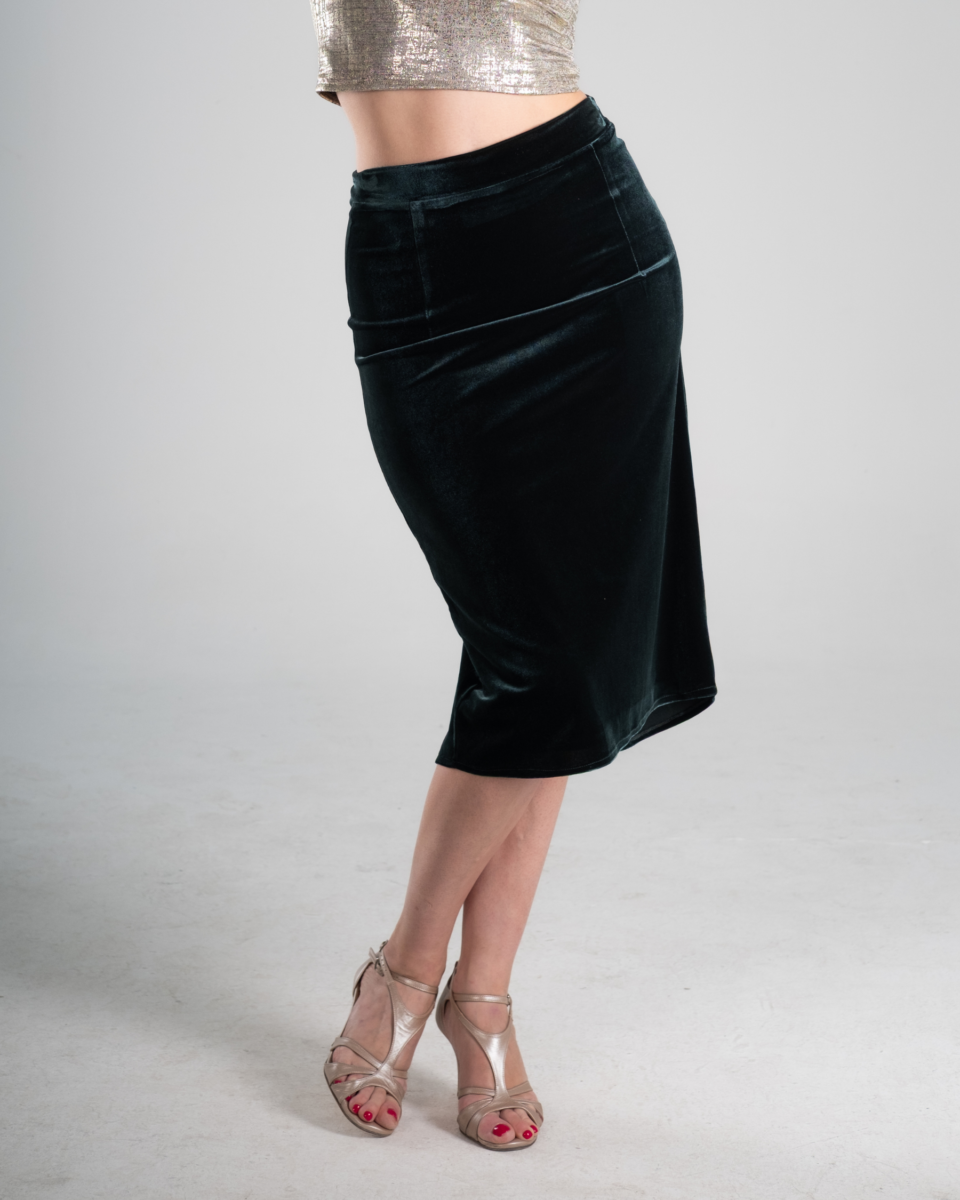
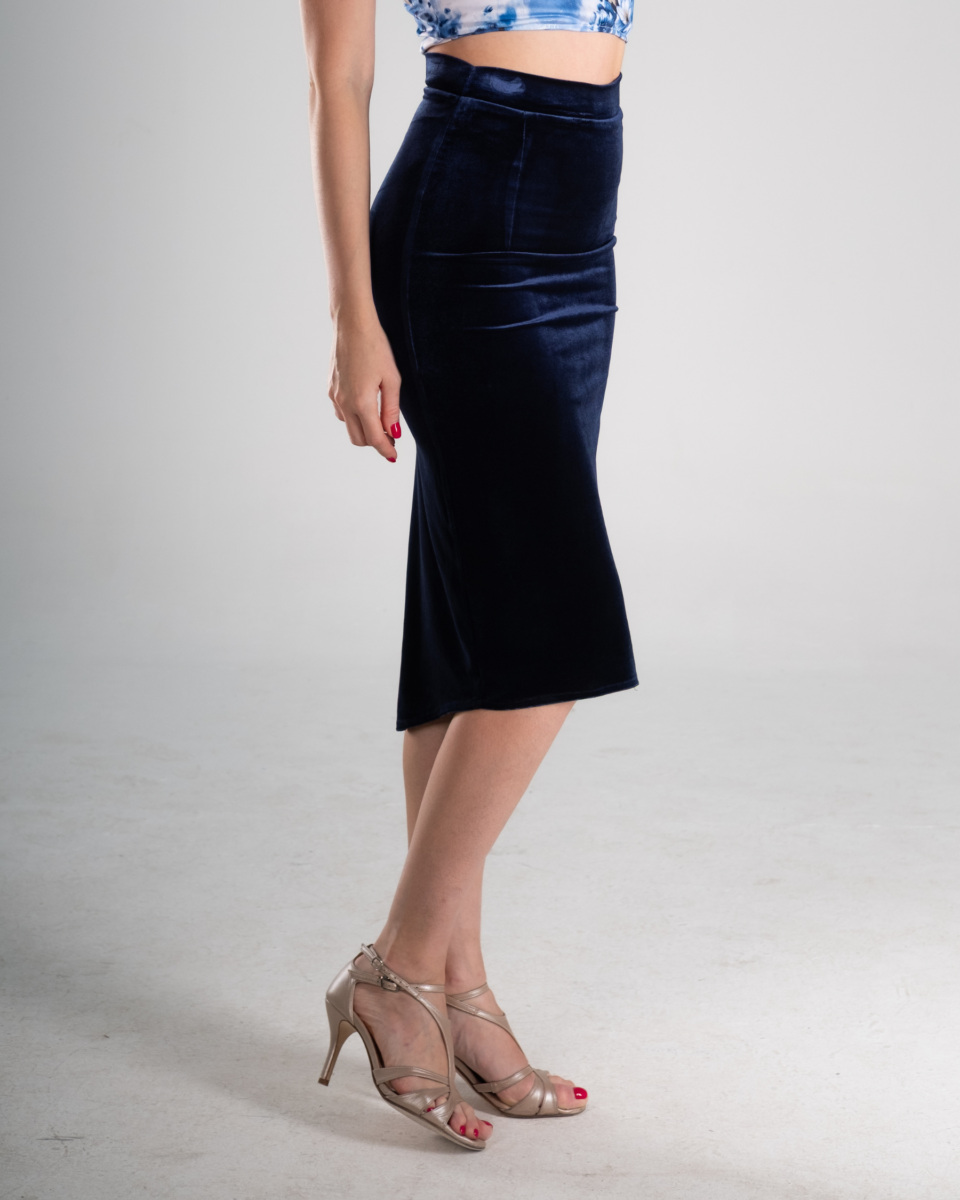
The high waist is the other structural choice. It gives the eye a longer leg, but more usefully it gives the skirt something to sit on. A skirt anchored at the natural waist stays where you put it through an entire tanda.
Velvet, pleated and sheer
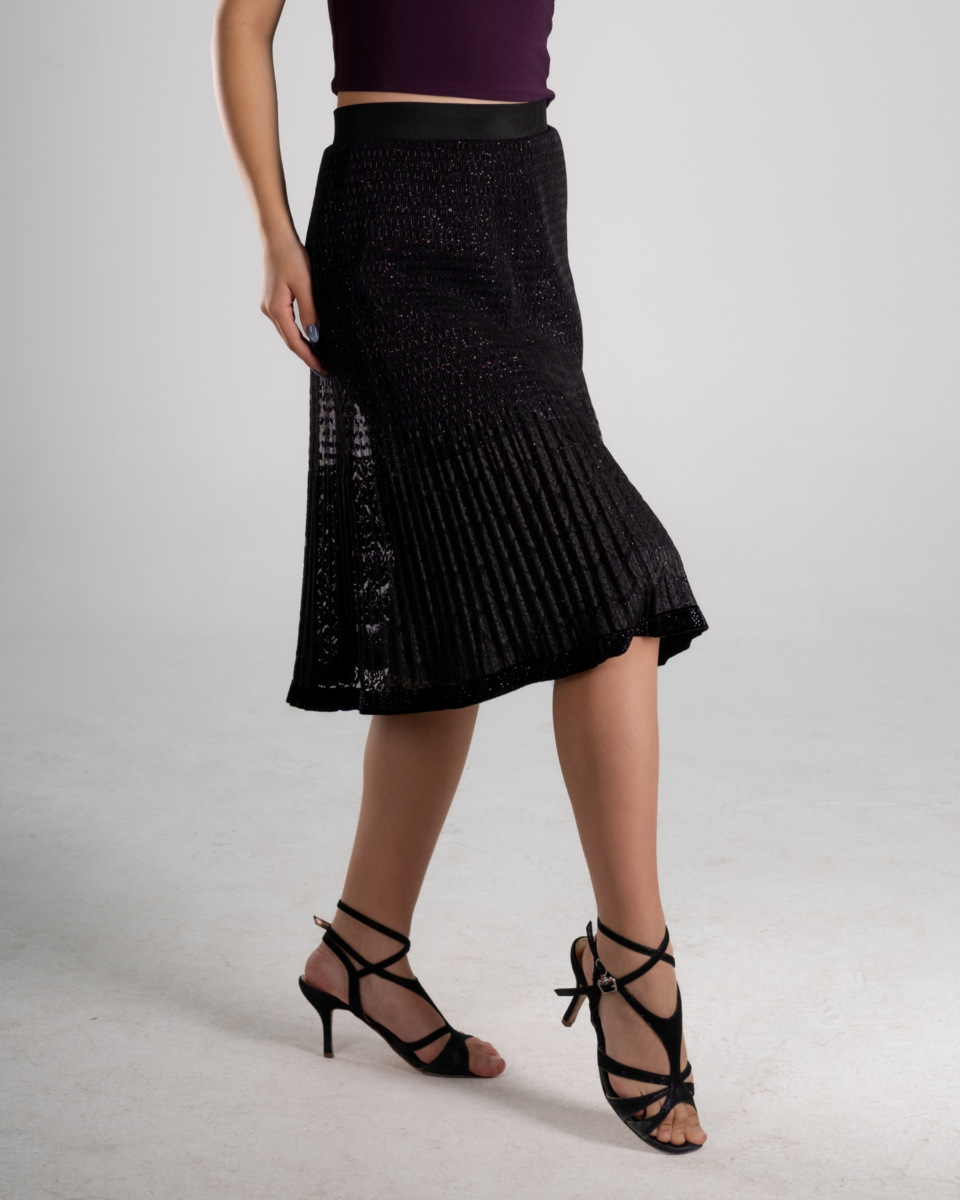
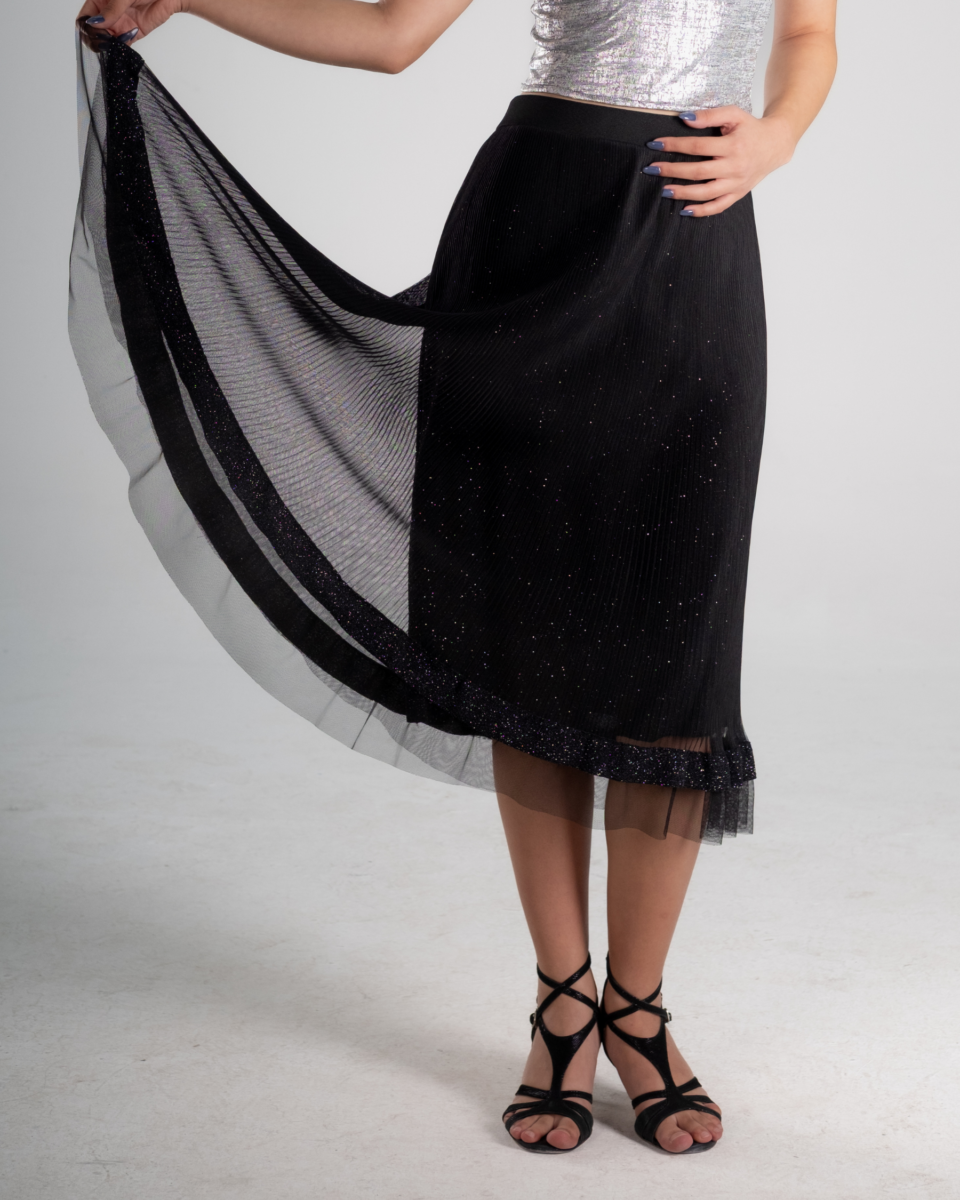
Velvet for weight and depth. Pleated for a skirt that opens sharply and closes clean. Sheer layered over an opaque underskirt when you want movement to be visible rather than felt. Jersey and godet cuts when you want fluidity without volume.
Each skirt is made to order in Istanbul, one to two weeks in production. Full measurements are in the size guide, and we will help you choose if you’re unsure.