




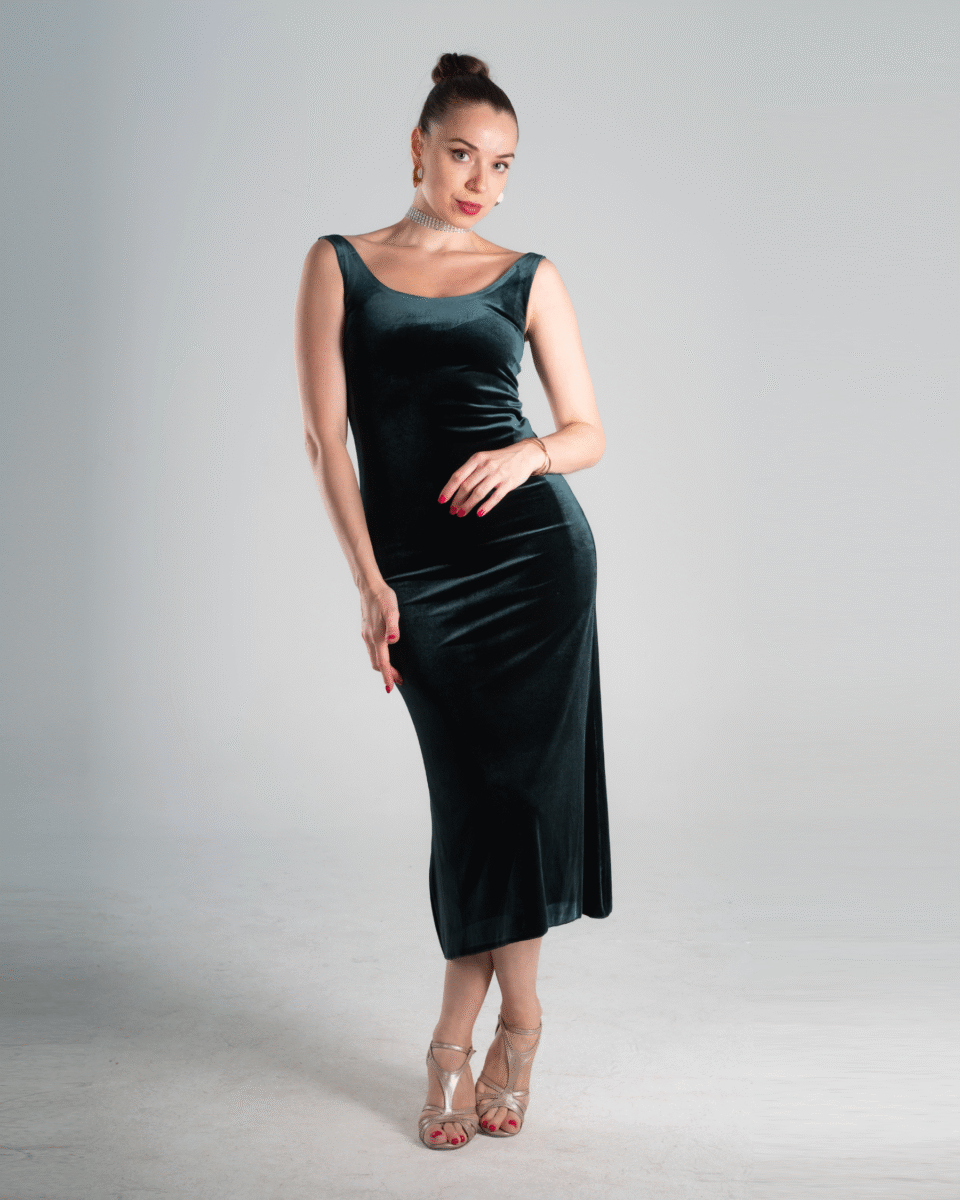
The tango dress came first
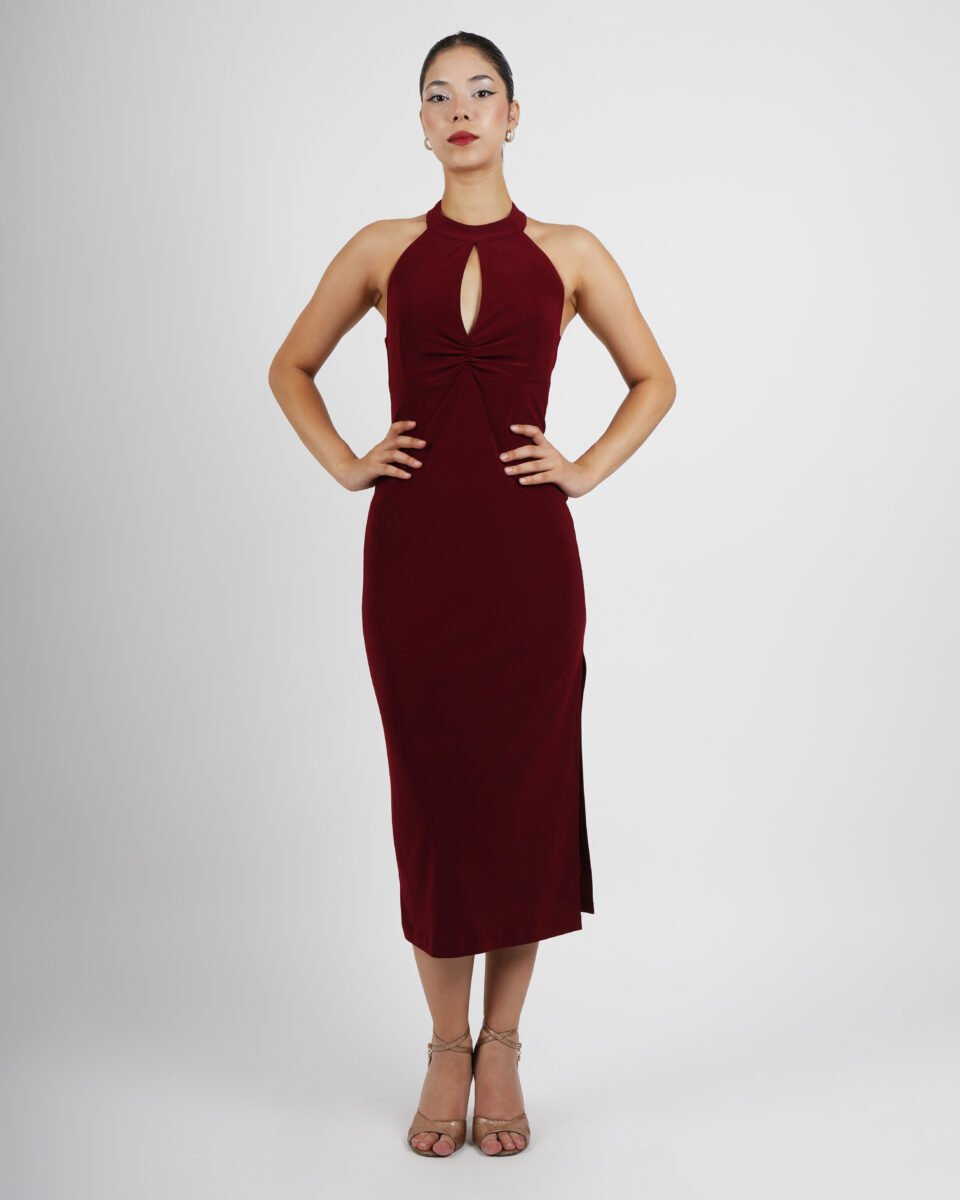
The dress came first. Before separates, before the two-piece, before anything the milonga has invented since — a woman dressed for tango wore one piece of cloth from shoulder to hem, and the whole line of her body read as one gesture.
That unbroken line is still the reason to choose a dress. A skirt and top will always show their seam. A dress doesn’t. When you step into a back ocho and the light catches you side-on, there is nothing interrupting the shape.
What a tango dress has to survive
An evening of social dancing asks more of a dress than almost any other occasion. It has to move through a giro without riding up. It has to hold its shape after four hours in an embrace. It has to sit under a partner’s hand at your back without bunching, and it has to fall correctly again the moment the tanda ends.
We cut for that. The waist sits where it can hold, not where a photograph would prefer. Hems are weighted so the skirt returns to the leg rather than hanging away from it. Backs are finished so the fabric reads clean under a hand.
Velvet, jersey and metallic under low light
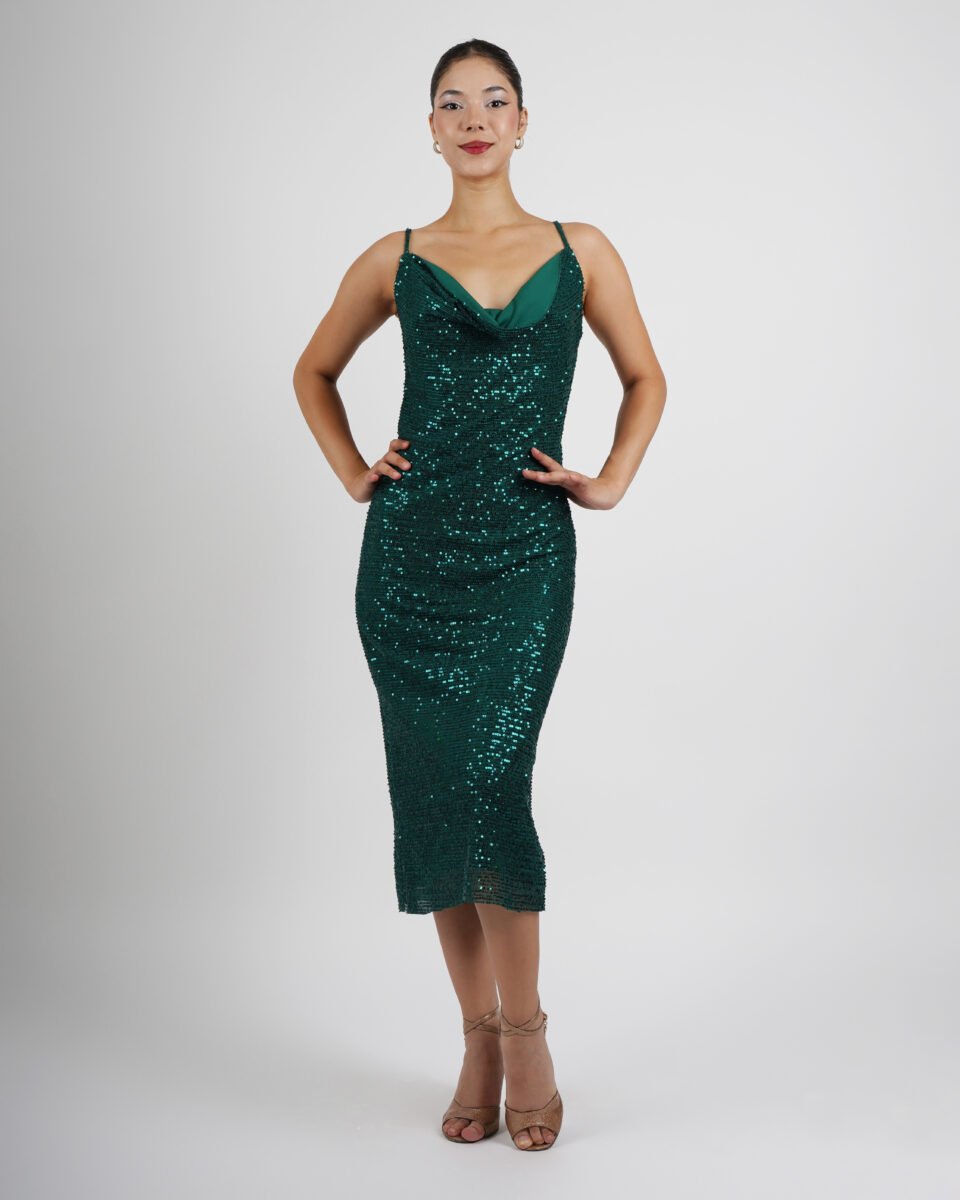
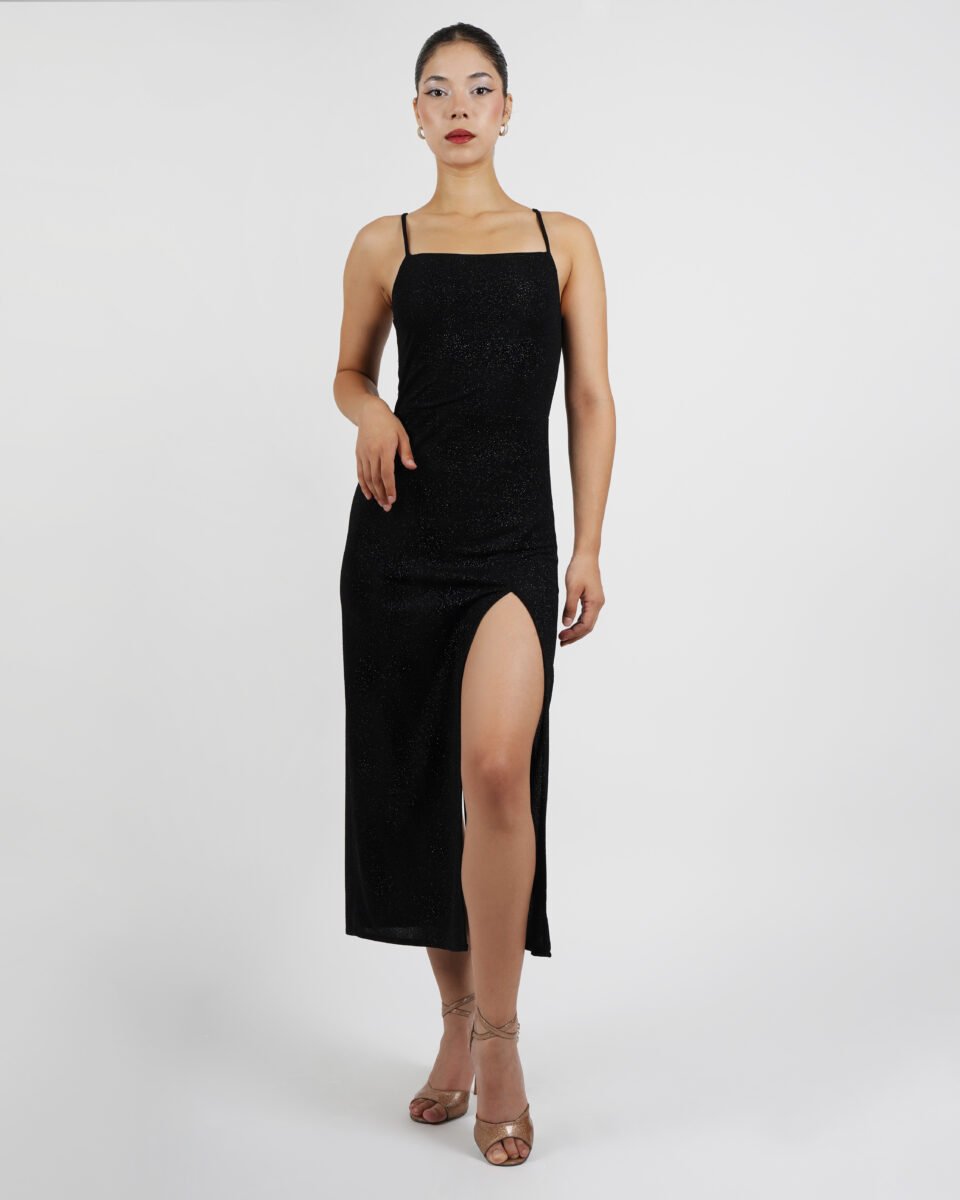
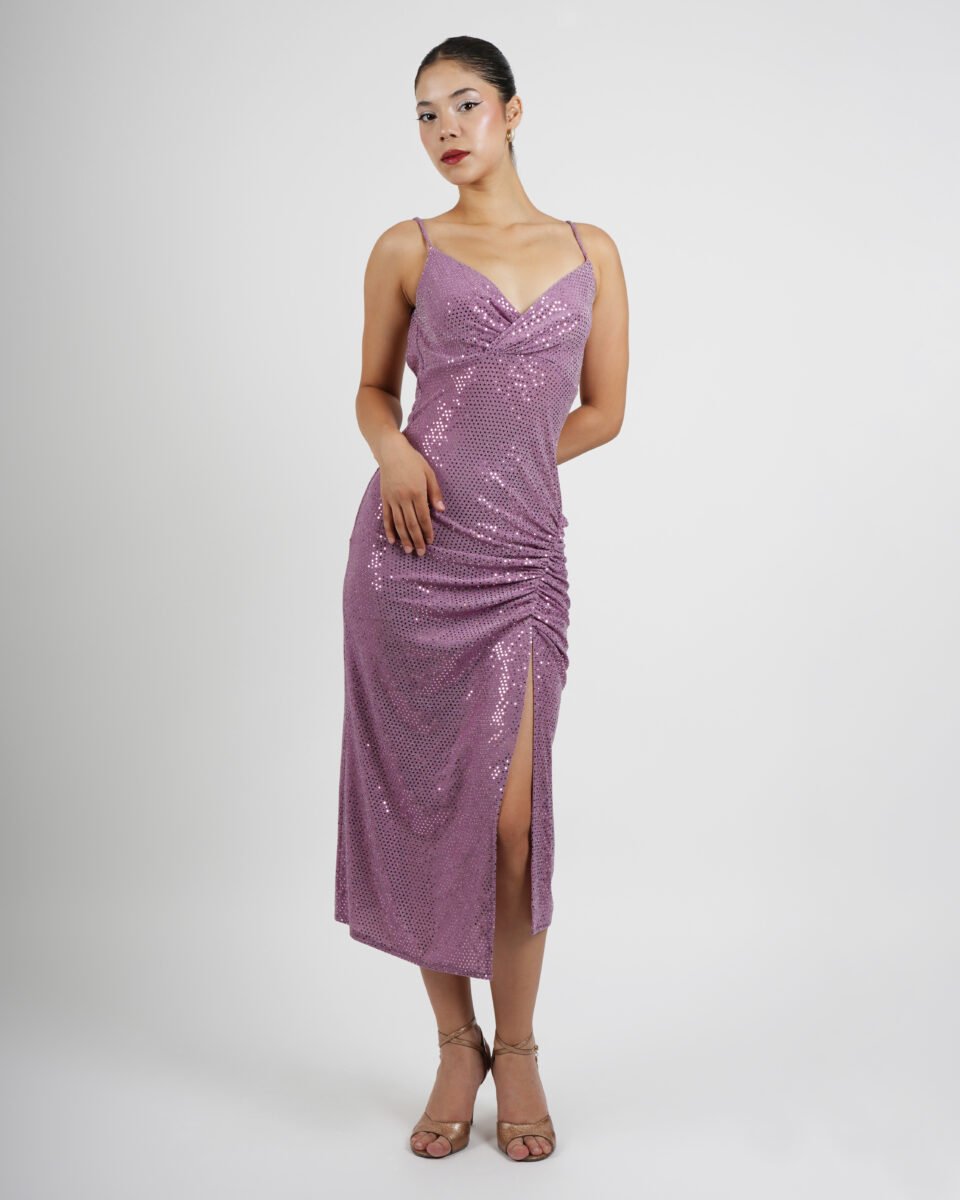
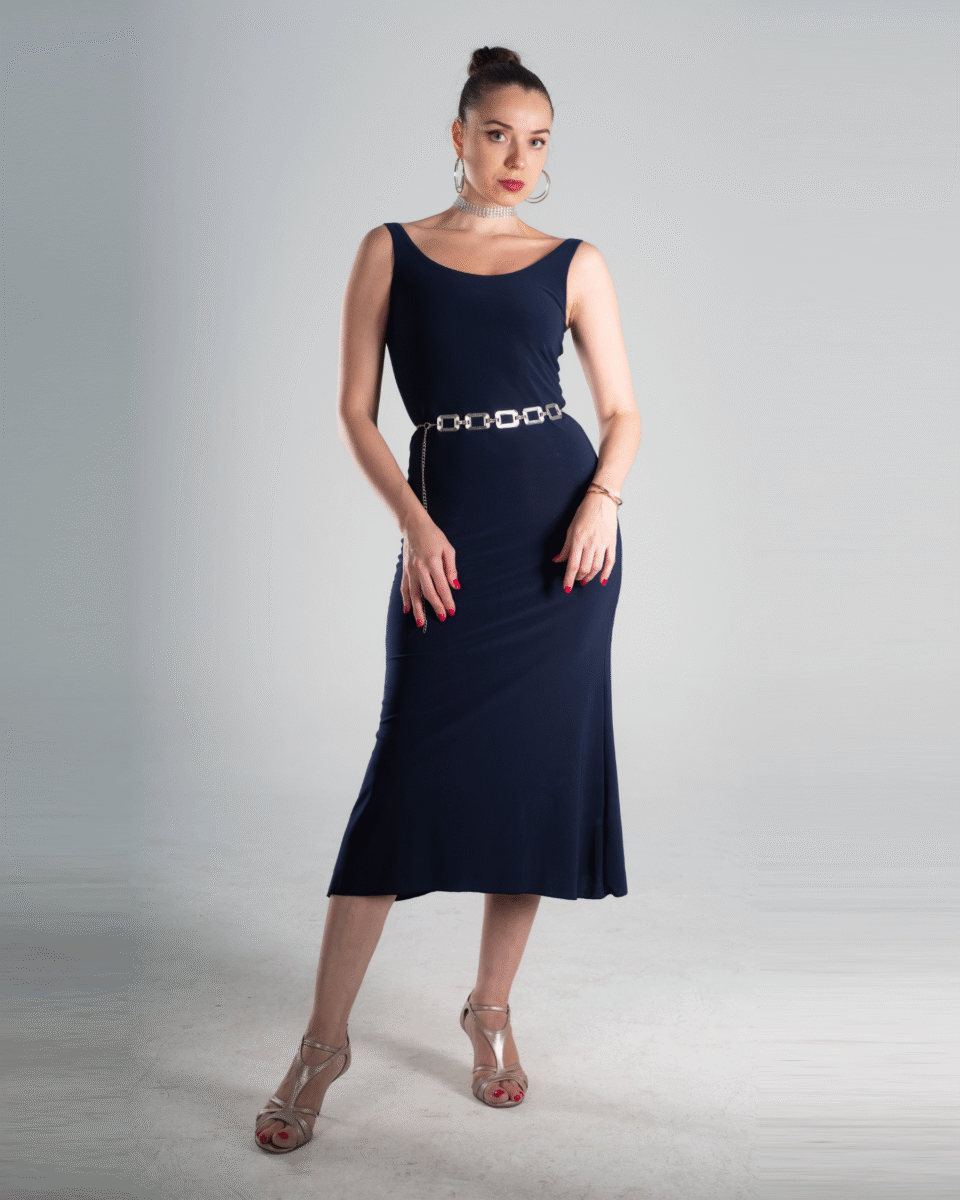
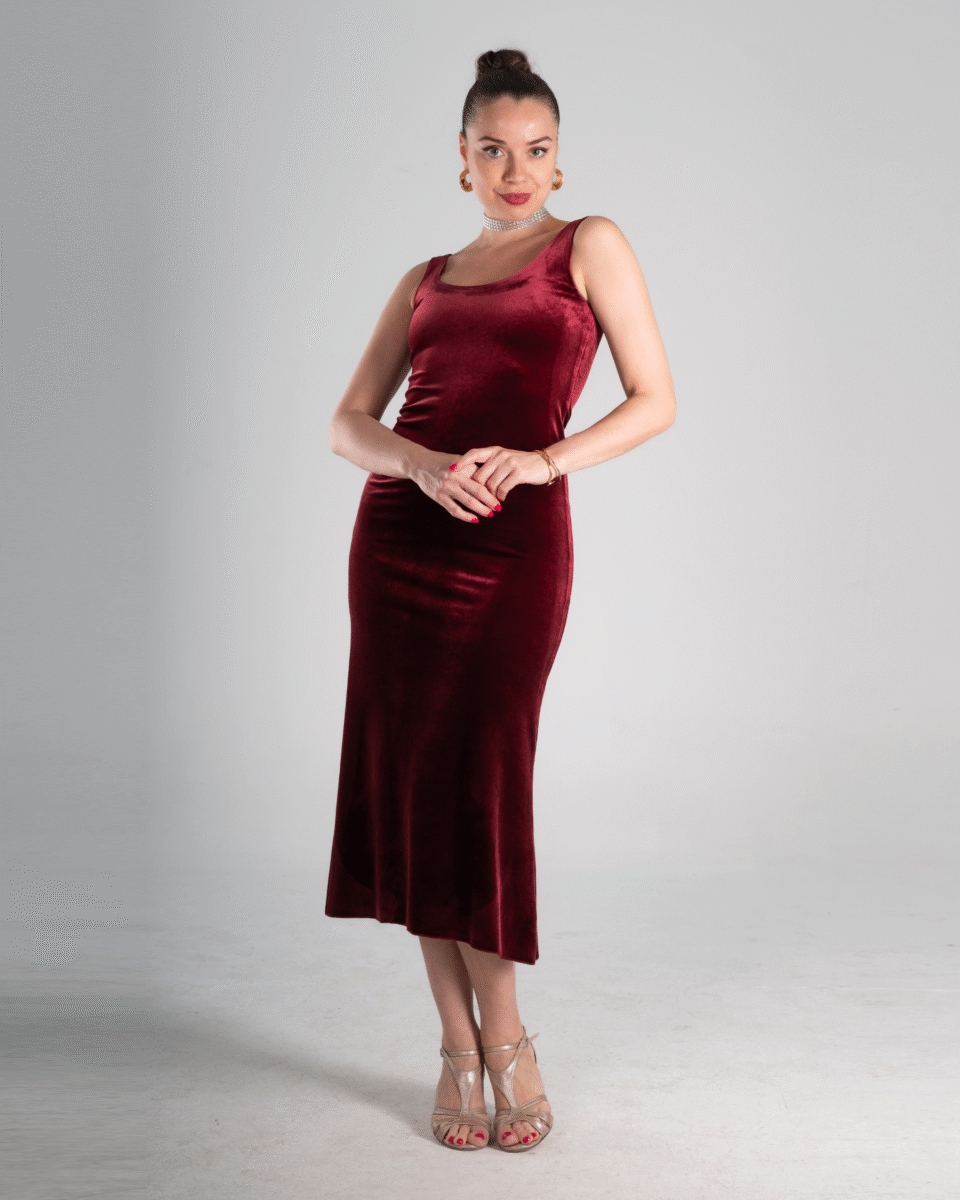
Velvet absorbs light and gives depth — a red velvet dress reads almost black at the edge of the floor and then turns colour when you pass under a lamp. Metallic and sequin catch and throw light, which reads across a room but asks more of the wearer. Jersey moves closest to the body and asks the least.
Every dress is made to order after you place your order. Production takes one to two weeks; delivery one to three. If you’re between sizes, write to us before ordering — we would rather spend ten minutes on an email than have a dress reach you that doesn’t work.